
Cashmere Yarn Count Explained: 2/26 to 2/60 Nm — Which Count to Use for Your Product
Choosing the wrong cashmere yarn count can ruin a design. A practical guide to Nm counts, gauge matching, and end-use selection for B2B buyers and product designers.
Cashmere Yarn Count Explained: 2/26 to 2/60 Nm
“100% cashmere yarn” tells you the fiber. The count tells you how fine or thick the yarn is, which determines the gauge, hand feel, and end-use of your finished product.
A wrong count choice means a sweater that’s too heavy for the design, or a scarf that’s too flimsy. This guide covers the practical implications of cashmere yarn counts from 2/26 Nm to 2/60 Nm.
What does “2/48 Nm” actually mean?
Cashmere yarn counts use the Nm (Number metric) system. The format is plies/fineness:
- 2/ means 2-ply (two single yarns twisted together)
- 48 means 48,000 meters of yarn weighs 1 kg
So a 2/48 Nm cashmere yarn is a 2-ply yarn where 48 km of the yarn weighs 1 kg. Higher Nm = finer yarn.
The count you choose depends on the gauge (knits per inch) of your final product:
| Count (Nm) | Weight per meter | Gauge | Best for |
|---|---|---|---|
| 2/26 | ~0.077 g/m | 5-7 | Chunky sweaters, blankets, heavy scarves |
| 2/32 | ~0.063 g/m | 7-9 | Mid-gauge sweaters, medium scarves |
| 2/36 | ~0.056 g/m | 9-12 | Standard sweaters |
| 2/48 | ~0.042 g/m | 12-14 | Fine-gauge sweaters, light scarves |
| 2/60 | ~0.033 g/m | 14-18 | Ultra-fine knits, premium scarves |
| 2/80 (custom) | ~0.025 g/m | 18+ | Sheer fabrics, exceptional luxury |
Match yarn count to gauge
The relationship between yarn count and knitting gauge is roughly inverse. Higher Nm = finer yarn = more stitches per inch for a given fabric weight.
Practical rule of thumb:
- For 5-gauge chunky: use 2/26 to 2/30 Nm
- For 7-gauge mid: use 2/30 to 2/36 Nm
- For 9-gauge standard: use 2/36 to 2/40 Nm
- For 12-gauge fine: use 2/40 to 2/48 Nm
- For 14-gauge extra fine: use 2/48 to 2/60 Nm
- For 18-gauge sheer: use 2/60 to 2/80 Nm
Deviating too far in either direction gives you either a stiff, boardy fabric (count too low) or a flimsy, see-through fabric (count too high).
What 2/26 vs 2/60 means in hand feel
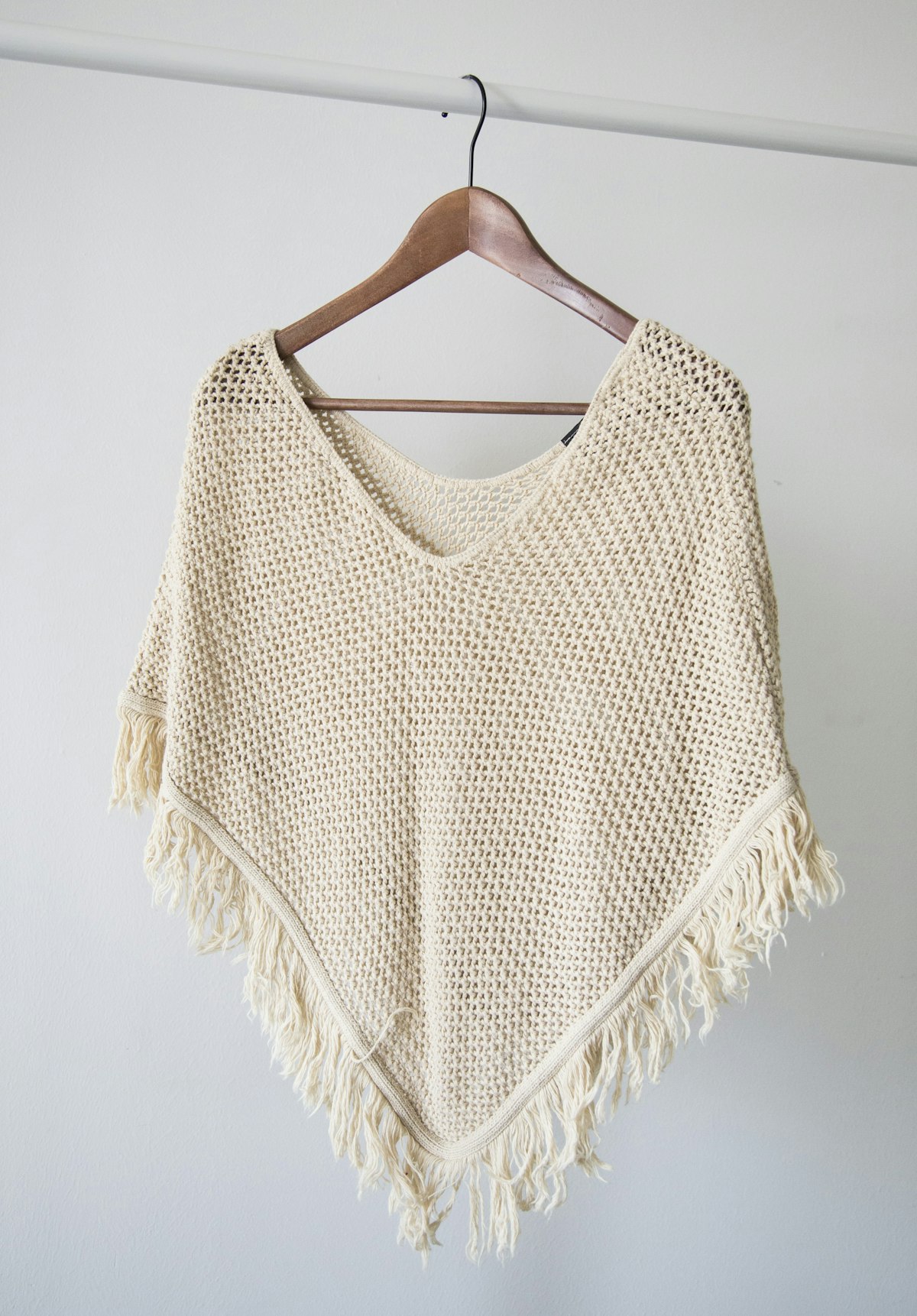
A 2/26 Nm cashmere yarn produces a chunky, robust fabric with substantial hand feel. The yarn is thick, the fabric has body, and the finished sweater has a “cozy” look. Think heavy winter cardigans or boatneck sweaters.
A 2/60 Nm cashmere yarn produces a fine, drapey fabric with a silky hand feel. The yarn is barely visible to the eye, the fabric flows, and the finished garment has a “luxury” look. Think thin V-necks, fine-gauge scarves, or layering pieces.
Most luxury B2B orders are 2/48 to 2/60 Nm. These counts give the smooth, drapey, “soft cashmere” feel that justifies the premium price.
Mid-market and casual tends toward 2/26 to 2/36 Nm. These are still soft, but with more body and a relaxed look.
Worsted vs woolen: count implications
The count you choose interacts with the spinning method:
- Worsted spinning requires longer fiber (Hauteur > 36mm) and is more common in finer counts (2/40 to 2/60+). Worsted yarn is smoother and stronger.
- Woolen spinning tolerates shorter fiber and is more common in heavier counts (2/26 to 2/40). Woolen yarn is softer and loftier.
A 2/60 Nm woolen-spun yarn is rare and requires exceptional fiber quality. Most 2/60 Nm is worsted-spun. Conversely, a 2/26 Nm worsted-spun yarn is possible but unusual — most 2/26 is woolen.
Custom counts (2/16 to 2/80)
Standard counts (2/26 to 2/60 Nm) cover ~90% of B2B demand. For specialty products, custom counts are possible:
- 2/16 to 2/24: Very heavy, used for blankets, heavy outerwear, and upholstery. Custom orders usually 200kg+.
- 2/80 to 2/120: Ultra-fine, used for sheer woven fabrics and exceptional luxury pieces. Lead time +30 days; custom orders 100kg+.
For custom counts, add +20-30% lead time and expect 200kg+ MOQ.
How to test yarn count before committing
A simple test for any sample cone:
- Measure 10 meters of yarn
- Weigh it (use a milligram scale for accuracy)
- Calculate: count = 10,000 / weight_in_grams × 2 (since 2-ply)
- Compare to claimed count: should be within ±2%
A supplier claiming 2/48 Nm but testing at 2/32 Nm is a quality red flag. Always test samples before placing bulk orders.
Mixing Ordos and Mongolian cashmere for unique yarn
Some premium B2B buyers request mixed Ordos Mongolian cashmere yarn — combining fibers from both Inner Mongolia and Mongolia proper. The goal is a unique hand feel that combines:
- Ordos fiber: Slightly higher crimp, more “spring” in the yarn
- Mongolian fiber: Slightly longer staple, more “drape” in the fabric
The result is a yarn with both properties — soft and lofty and drapey. It’s a subtle difference (most customers won’t notice) but distinctive enough to justify a “signature yarn” marketing claim.
Mixed Ordos Mongolian yarn requires dual sourcing from both regions and careful blending at the dehairing stage. Most Ordos factories can do this, but you need to specify it explicitly.
Stock vs custom: lead times and MOQ
- Stock counts (2/26 to 2/60 Nm in white): 7-10 day dispatch, MOQ 10kg
- Custom counts: 15-25 days, MOQ 50kg
- Custom color (Pantone match): 20-30 days including lab dip, MOQ 30kg
- Custom blend (cashmere/wool, cashmere/silk): 25-35 days, MOQ 100kg
For B2B buyers new to cashmere yarn, we recommend starting with 2/48 Nm white in stock (the workhorse luxury count) before exploring custom options.
Need help choosing the right yarn count? Contact our yarn team with your design specs (target gauge, fabric weight, end-use) and we’ll recommend 3 yarn options with sample cones.
